

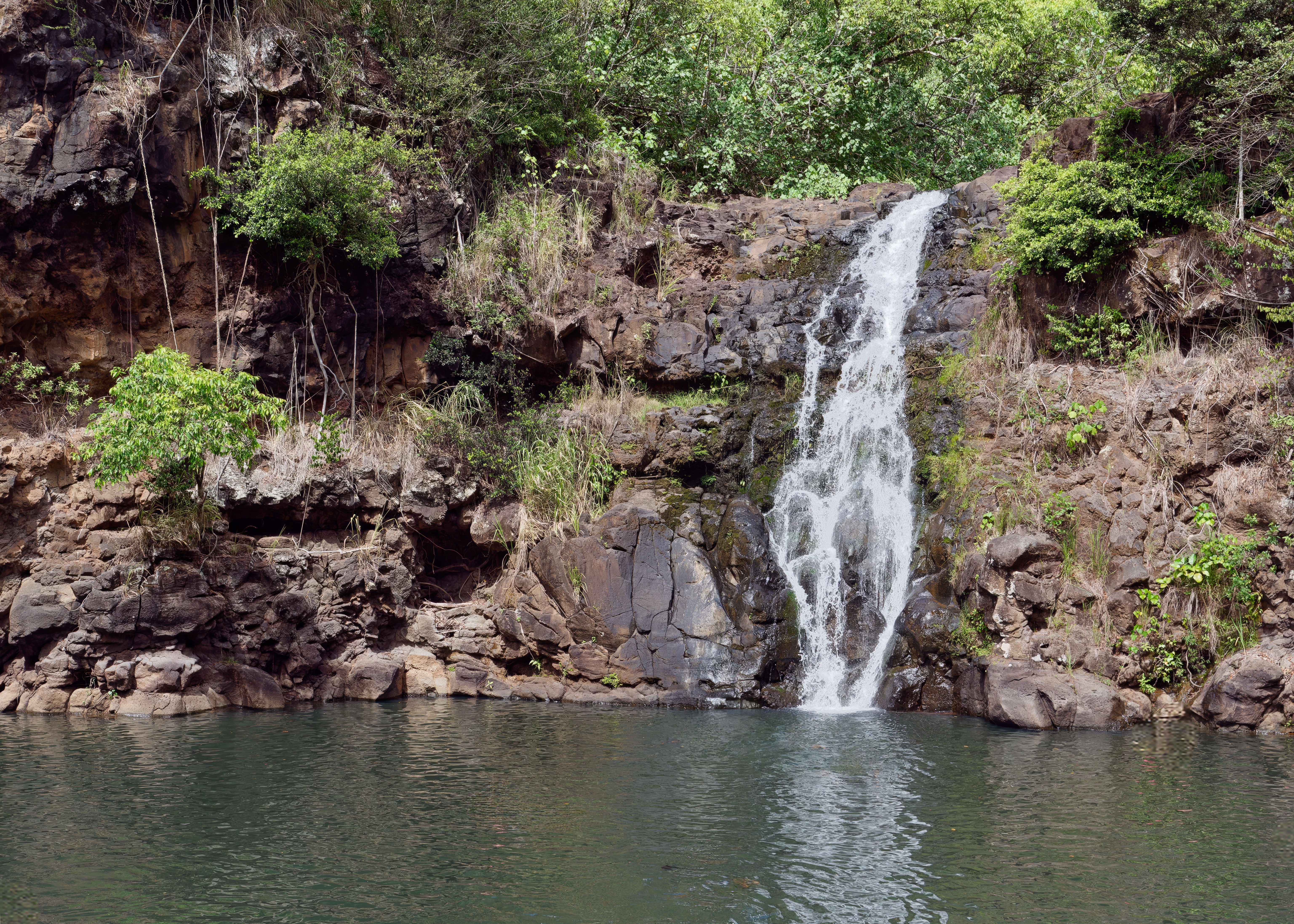
Even something as small as a raindrop travels through an entire ahupuaʻa, from the mountains to our reefs, interacting with the environment along the way. The journey shows how our natural resources are connected from mauka to makai and why what happens upstream matters downstream.
Plop! A raindrop lands high in the mountains. From here, it might soak into the forest floor, become groundwater, or flow into a stream. During heavy storms, rainfall often exceeds the ground’s ability to absorb water, creating storm water runoff that moves downhill. This begins our raindrop’s journey from mauka to makai.
First stop: The mountains. In a healthy forest, vegetation and soil act like a natural sponge. Plants slow rainfall, while soil absorbs and stores some of the water. This helps reduce the amount and speed of runoff entering streams.
Next stop: The streams. Gravity carries our raindrop downhill. As storm water runoff moves through the watershed, it picks up dirt, bacteria and other pollutants along the way. Heavy flows also increase erosion, carry sediment downstream, and affect stream habitats. What started as rain in the mountains now carries materials from the land. These processes affect water quality and the ecosystems that support the plants and animals we depend on.
Through our communities. As communities develop, natural areas are often replaced with buildings, roads, and pavement. These hard surfaces prevent water from soaking into the ground, increasing the volume of storm water runoff. Rain falling on parking lots, rooftops, and streets flows across these surfaces, picking up pollutants, like trash, oil and grease, and chemicals, along the way.
Our raindrop might also pass through wetlands, agricultural areas, loʻi, or other lowland environments. These areas help slow the flow of water, allowing sediment to settle and some water to soak into the ground. The plants present in wetlands and loʻi can also remove some of the pollutants from storm water as it moves through the soil, while excess fertilizers in agricultural fields may introduce nutrients to the runoff. The surrounding landscape influences how quickly water moves and what it carries downstream.
Final stop: The coast. After traveling through neighborhoods and lowland areas, our raindrop reaches the coast, either flowing across the land or entering a storm drain that leads to the ocean. But the raindrop might not arrive alone. Sediment and pollutants that may have been picked up along the way affect coastal water quality. Excess sediment clouds the water, reducing sunlight for corals and algae and affecting marine life, including the fish we eat. Other pollutants, such as oil and nutrients, make the ocean a toxic home for aquatic plants and animals.
Our raindrop’s journey from mauka to makai shows how closely connected an ahupuaʻa’s resources are. What happens upstream affects the health of our streams, coastal waters, and reefs. By keeping litter and pollutants out of our storm drains and waterways, we each play a role in protecting these resources, from the mountains to the ocean.
Sources: EPA