
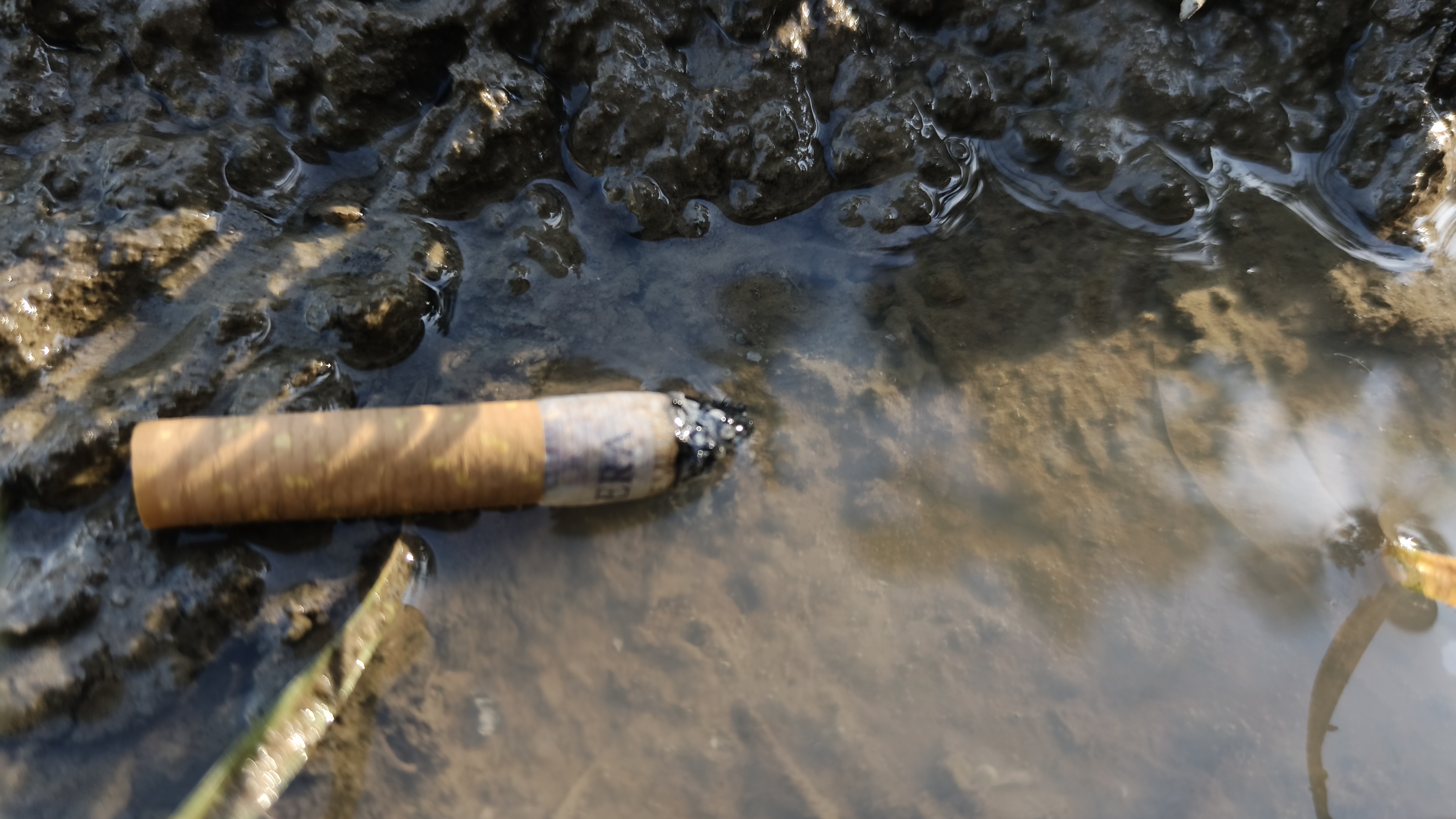
A recent report published by the Surfrider Foundation found that cigarette butts were the most common litter item collected during beach cleanups. Across 54 cleanups on Maui, Kauaʻi, and Oʻahu in 2025, Surfrider volunteers removed more than 170,000 pounds of trash and, overall, 25% of all items collected were related to smoking waste. Although cigarette butts are small, their environmental impact adds up quickly. Rain and runoff can carry improperly discarded cigarette butts into a storm drain, river, or stream, and eventually into the ocean where they disrupt the ecosystem.
Cigarette filters are made from nonbiodegradable plastic fibers. As filters break down, they become smaller pieces of plastic that remain in the environment. Used cigarettes also contain nicotine, heavy metals, and other toxins. When wet, these chemicals can leach into soil and water, affecting water quality, coastal ecosystems, and public health.
Proper disposal is a simple habit that helps protect our environment. Smoking comes with the responsibility to take care of your waste. Consider these tips:
- Use designated smoking areas with cigarette waste receptacles nearby.
- Avoid smoking near storm drains, waterways, or remote areas where proper disposal is unavailable.
- Fully extinguish cigarette butts and place them in an appropriate receptacle. Never leave them on the ground or place a lit cigarette in the trash.
- Carry a portable ashtray to collect your cigarette butts when a receptacle is not available. Dispose of them properly once they are fully extinguished.
- Never flick cigarette butts from a vehicle. They can land on the roadway, where rain and runoff can carry them into storm drains and waterways.
An estimated 1.69 billion pounds of cigarette butts become litter each year around the world (UNDO). Plastic waste from cigarette filters and packaging also creates an estimated $25.7 billion in annual waste management costs and lost marine ecosystem services (KITV).
Every cigarette butt kept off the ground is one less item that rain and runoff can carry into Hawaiʻi’s waterways. Properly extinguishing and disposing of cigarette butts helps keep our storm drains, streams, and oceans clean, which helps mālama i ka wai – protect our water.
Sources: KITV, UNDO, Surfrider Foundation